
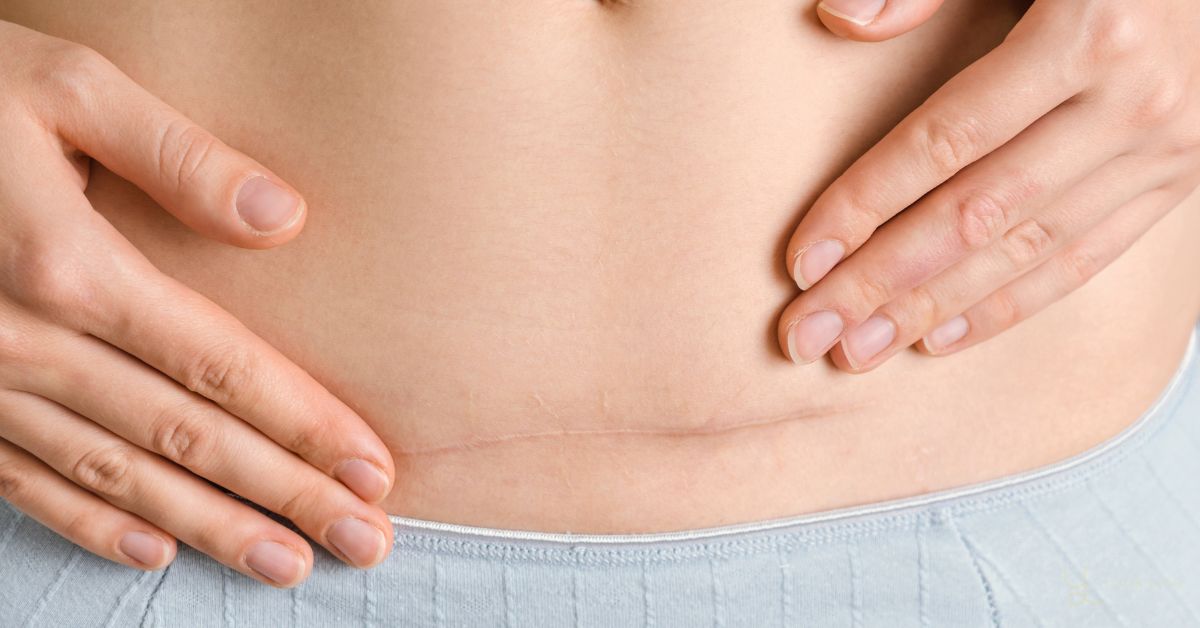
Scarring is a normal part of the body’s healing process after any procedure that involves an incision in the skin. Liposuction uses relatively small incisions to allow a cannula to enter the treatment area, so the resulting scars are usually small. However, their eventual appearance varies between patients.
Good Liposuction Scar Care can support normal healing and may help scars become less noticeable over time.
It is equally important to understand that no surgeon, treatment or scar product can guarantee a completely invisible scar. Genetics, skin type, incision location, wound healing and postoperative care all influence the final appearance.
Why Does Liposuction Cause Scars?
During liposuction, small incisions are required so that a thin cannula can be introduced beneath the skin.
Surgeons will generally consider incision placement carefully, with the aim of making access possible while keeping scars as discreet as reasonably achievable.
The number and location of incisions depend on the area being treated and the surgical technique required.
Every incision heals by producing scar tissue. Therefore, Liposuction Scars should be considered part of the procedure rather than an unexpected complication.
The aim is for these scars to mature and become less conspicuous with time.
What Do Liposuction Scars Look Like Initially?
New scars frequently look more noticeable before they improve.
During the early stages of Liposuction Scar Healing, an incision may appear pink, red or darker than the surrounding skin. It may also feel slightly firm.
This does not necessarily represent the final appearance.
Scar maturation is a slow biological process that can continue for many months. In some patients, scars may take a year or longer to reach a mature appearance.
Patients should therefore avoid judging their final scars during the first few weeks after surgery.
Step 1: Follow Your Wound-Care Instructions
The most important aspect of Scar Care After Liposuction begins before scar creams or silicone products are considered.
The incision must first heal properly.
Patients should follow the surgeon’s instructions about dressings, bathing, keeping the wound clean and recognising potential signs of infection.
Avoid applying unapproved creams, oils or other products to an incision that has not fully closed.
A product that is appropriate for a mature scar may not be appropriate for a fresh surgical wound.
Step 2: Avoid Picking at Scabs or Incisions
It can be tempting to pick at a small scab, surgical glue or peeling skin around an incision.
Avoid doing this unless your medical team specifically instructs you otherwise.
Disturbing the healing surface can irritate the area and potentially interfere with normal wound healing.
Allow dressings, sutures, surgical glue and scabs to be managed according to the instructions provided by your surgeon.
Step 3: Protect Healing Scars From the Sun
Sun protection is an important part of Liposuction Scar Care.
New scars can be particularly sensitive to ultraviolet exposure, and sun exposure can contribute to pigmentation changes that make a scar more noticeable.
Depending on the location of your scars, clothing may provide useful physical protection.
Once the incision has healed sufficiently and your surgeon has approved topical products, appropriate sunscreen may also be recommended when the area could be exposed.
Sun protection should continue well beyond the first few weeks because scar maturation takes time.
Step 4: Ask About Silicone Scar Treatment
Silicone gels and silicone sheets are commonly used in scar management.
However, they should generally be introduced only once the wound has adequately healed and when advised by the treating practitioner.
Your surgeon can recommend whether silicone therapy is appropriate, when it should begin and how long it should be used.
Do not assume that using more products will produce better results. Consistent use of an appropriate scar-management plan is generally preferable to repeatedly changing between products.
Step 5: Wear Your Compression Garment as Directed
Compression garments are frequently prescribed following liposuction.
Their primary purpose is not simply scar treatment. They can support the tissues during Liposuction Recovery and help manage postoperative swelling.
Patients should follow their surgeon’s instructions regarding how long and how often the garment should be worn.
A garment that is excessively tight, folded or rubbing directly against an incision may cause irritation. If a compression garment is uncomfortable or appears to be affecting a wound, contact the surgical team rather than simply adjusting the postoperative plan yourself.
Step 6: Avoid Smoking and Nicotine
Smoking and nicotine exposure can negatively affect wound healing because of their effects on blood vessels and tissue oxygenation.
Patients undergoing elective surgery should discuss smoking, vaping and nicotine-containing products honestly with their surgeon.
Your surgeon may require nicotine to be stopped for a specified period before and after surgery.
Following these instructions is important for general surgical safety and wound healing, not merely for cosmetic scar appearance.
Step 7: Support Healing With Good Nutrition
The body requires adequate nutrients to repair tissue.
During Liposuction Recovery, a balanced diet that provides adequate protein, vitamins, minerals and energy supports normal healing.
Hydration is also important.
Extreme calorie restriction during the early postoperative period is generally not a sensible strategy unless there is a specific medical reason and appropriate professional supervision.
The body needs resources to heal.
What Factors Affect Liposuction Scar Healing?
Even with excellent postoperative care, people scar differently.
Factors that may influence Liposuction Scar Healing include genetics, skin pigmentation, age, incision location, previous scar history, infection, wound tension, smoking and individual healing characteristics.
Some people are also more prone to raised or abnormal scars, including hypertrophic or keloid scars.
If you know that you have previously developed thick, raised or keloid scars, tell your surgeon during your consultation.
This information may influence surgical planning and postoperative scar management.
When Should You Contact Your Surgeon?
During early recovery, patients should monitor incision sites according to their postoperative instructions.
Increasing redness, warmth, significant swelling, worsening pain, unusual discharge, wound separation or other concerning changes should be reported to the surgical team.
Do not attempt to treat a suspected wound complication with cosmetic scar products.
Early assessment allows your medical team to determine whether the wound is healing normally or requires treatment.
Can Liposuction Scars Completely Disappear?
A surgical scar cannot be guaranteed to disappear completely.
The objective of careful surgical technique and appropriate Scar Care After Liposuction in Cape Town is to allow the scar to heal as favourably as possible.
Over time, many liposuction scars become flatter, softer and less noticeable, but the final appearance differs between individuals.
Patients should also remember that scar appearance at six weeks is very different from scar appearance after several months of maturation.
Patience is an important part of the process.
Good Scar Care Starts With Good Recovery
Effective Liposuction Scar Care is not about finding one miracle cream.
It starts with appropriate wound care, protecting healing tissue, following postoperative instructions, avoiding smoking and nicotine, managing sun exposure and giving scars sufficient time to mature.
Where appropriate, your surgeon may recommend additional treatments such as silicone-based scar therapy once the incisions have healed.
Most importantly, patients should follow the scar-management plan provided for their particular procedure rather than relying solely on general advice found online.
Liposuction Scars are part of the healing process, but careful postoperative management can help create the best possible environment for scars to mature favourably.
This article provides general educational information only. Always follow the postoperative wound and scar-care instructions provided by your treating surgeon, as individual recommendations may differ.
Recent Comments