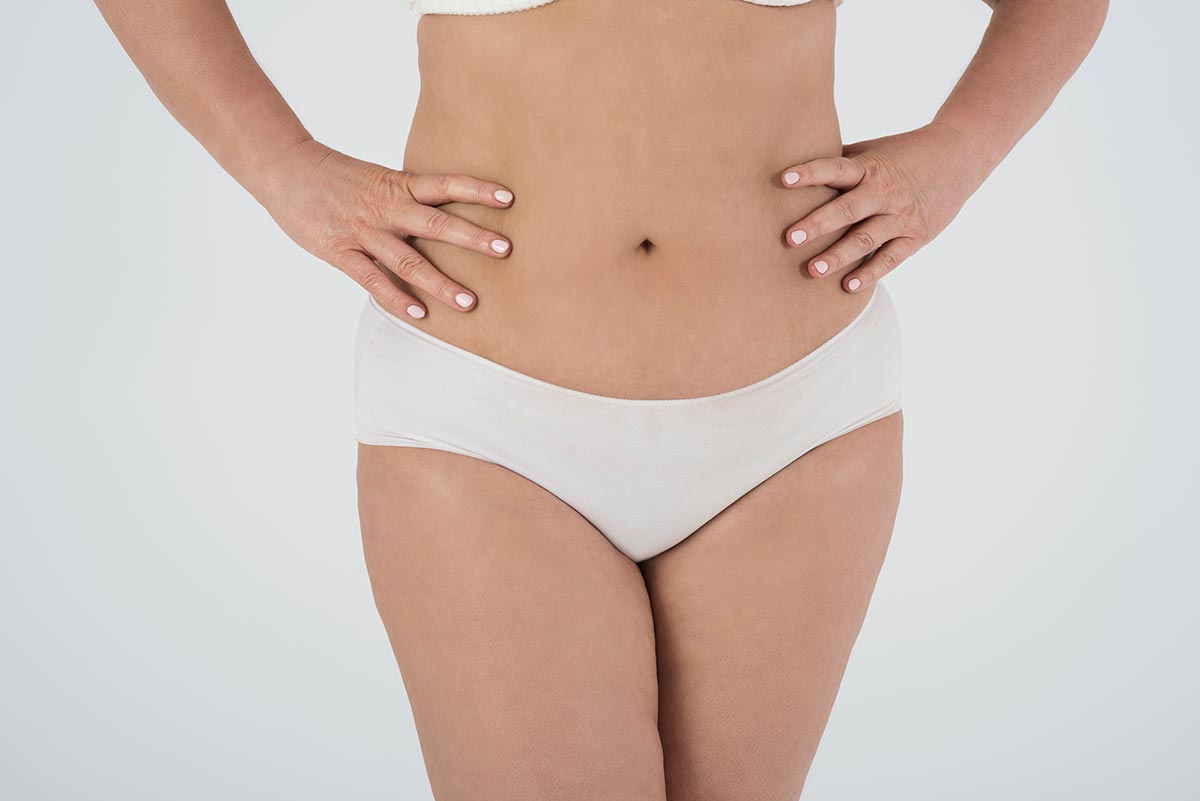
It is possible to maintain a relatively stable weight, exercise regularly and still have areas of the body that remain disproportionately full. Genetics, hormones, age and individual patterns of fat distribution all influence where the body stores fat, which explains why certain deposits can be particularly resistant to lifestyle changes.
Liposuction is a body-contouring operation used to reduce selected deposits of subcutaneous fat. It is not designed as a general weight-loss procedure, nor can it correct every concern associated with body shape.
For patients researching liposuction Cape Town options, understanding which areas can potentially be treated — and what determines whether those areas are suitable — is more useful than simply focusing on the amount of fat that can be removed.
What Is Stubborn Fat?
The term stubborn fat usually describes a localised deposit that remains despite changes in overall body weight.
When a person loses weight, fat cells throughout the body generally decrease in size. The body does not, however, reduce fat evenly from every area. Someone may lose weight from the face, chest or legs while retaining disproportionate fullness around the abdomen, flanks or thighs.
These patterns are partly genetically determined.
Importantly, liposuction targets subcutaneous fat — the layer situated beneath the skin. It does not remove visceral fat located deeper inside the abdomen around the internal organs.
The distinction matters because two people with a similar abdominal circumference may have very different proportions of subcutaneous and visceral fat.
Which Areas of the Abdomen Can Be Treated?
The abdomen is one of the areas commonly considered for liposuction.
Fat may accumulate below the navel, across the upper abdomen or throughout both areas. Treatment planning considers the entire abdominal contour rather than viewing each pocket in isolation.
Skin quality is important. Removing volume from beneath firm skin can produce a very different result from removing the same volume beneath skin that is already loose.
Previous abdominal operations, scars and changes following pregnancy may also influence what can be achieved.
Liposuction cannot repair separated abdominal muscles or remove a significant apron of redundant skin. If these features are responsible for much of the abdominal shape, another approach may need to be considered.
Can Liposuction Treat the Waist and Flanks?
Fat around the flanks can influence the transition between the waist, back and hips.
Rather than concentrating only on the visible pocket, a surgeon assesses how the area connects with neighbouring contours. Removing too much from one isolated section while leaving adjacent fullness could create an unnatural transition.
For this reason, contouring of the waist may involve carefully planned treatment across more than one anatomical zone.
The goal is proportion rather than simply maximum fat removal.
A person’s skeletal structure also places natural limits on how narrow the waist can become. Liposuction changes fatty tissue; it does not alter the ribs, pelvis or underlying muscular frame.
Can the Hips and Thighs Be Treated?
The hips and thighs are common sites of genetically influenced fat storage.
The outer thighs may develop localised fullness that changes the line from the waist to the legs. The inner thighs can accumulate fat that affects their contour and, in some people, contributes to friction when walking.
These areas require careful assessment because the skin of the thighs can respond differently from abdominal skin.
Removing too much superficial fat can increase the risk of contour irregularities. Existing cellulite is another consideration. Liposuction is not a cellulite treatment, and changes in the underlying fat layer do not guarantee improvement in skin dimpling.
The surgeon therefore considers fat thickness, skin elasticity and overall leg proportions before deciding how much tissue can appropriately be reduced.
What About the Arms?
The upper arms may remain fuller than the rest of the body even after weight reduction.
When the fullness is predominantly caused by fat and the skin retains good elasticity, liposuction may help reduce arm circumference and improve proportion.
If substantial hanging skin is present, however, removing fat alone may leave the skin unable to contract sufficiently around the smaller arm.
This illustrates an important principle applicable to every body area: treatment suitability depends not only on how much fat is present but also on what will happen to the overlying skin once that volume is reduced.
Can Liposuction Be Used Under the Chin and Around the Neck?
Small areas can sometimes create noticeable changes in facial and neck proportion.
A localised pocket beneath the chin may obscure the transition between the jaw and neck even in someone who is otherwise relatively slim.
Where the fullness is caused by accessible fat and skin quality is appropriate, targeted removal may refine the contour.
However, a poorly defined jawline is not always caused by fat. Skin laxity, muscle position, chin projection and underlying skeletal anatomy can all influence the appearance of the lower face.
Assessment is therefore necessary before assuming that fat removal will create the desired change.
Can More Than One Area Be Treated?
More than one anatomical region can sometimes be addressed during the same operation, but this does not mean there is no practical limit to treatment.
The extent of surgery influences operating time, fluid management, recovery and overall surgical risk.
A surgeon must consider the total volume being treated, the patient’s medical health and whether combining multiple areas is appropriate.
In some cases, treating neighbouring regions together can produce a more balanced contour. In others, staging procedures may be preferable.
Patients considering liposuction South Africa options should therefore be cautious of treatment plans based primarily on the maximum number of areas that can be included in one session.
What Determines Whether an Area Is Suitable for Liposuction?
Several characteristics influence suitability.
The first is the type of fat. The deposit must be accessible to subcutaneous tissue rather than deeper visceral fat.
The second is skin elasticity. Skin needs sufficient ability to adapt to the reduced volume beneath it.
Fat distribution also matters. A defined localised deposit may respond differently from generalised fullness associated with overall body weight.
Existing asymmetry, cellulite, scars and previous procedures are assessed because they can influence the final contour.
General health is equally relevant. Medical conditions, medications, nicotine exposure and other risk factors form part of the surgical evaluation.
Finally, expectations need to correspond with what changing the fat layer can realistically accomplish.
Is Liposuction a Weight-Loss Procedure?
No. Liposuction is intended for contouring rather than substantial weight reduction.
The difference is important.
Weight-loss strategies aim to reduce overall body mass and improve health where excess weight is present. Liposuction selectively removes fat cells from particular areas to alter proportion.
A person may therefore see a visible contour change without experiencing a dramatic change on the scale.
Patients who are actively losing a significant amount of weight may be advised to reach a more stable point before considering surgery. Further weight loss after contouring can change both fat distribution and skin laxity.
Choosing Liposuction in Cape Town
Someone researching liposuction Cape Town treatment should expect an individual assessment rather than a standard menu of body areas.
The consultation should establish what is creating the unwanted contour, whether the skin is likely to adapt after fat reduction and how the proposed area relates to surrounding body proportions.
It should also cover incision sites, compression garments where applicable, expected swelling, activity restrictions and potential complications.
Photographs of another person’s result cannot determine suitability because fat distribution, skin thickness and body structure differ substantially between individuals.
Ultimately, the question is not simply whether a particular body part can undergo liposuction. It is whether reducing fat in that area is likely to produce a proportionate improvement for that particular patient.
Recent Comments